Load Test Prescription & Oversight
As building owners place greater emphasis on maintaining compliant Exterior Building Maintenance (EBM) and window cleaning systems, proof load testing has become a critical component of regulatory compliance and risk management.
Improperly designed or undocumented testing programs can create unnecessary cost, operational disruption, or liability exposure.
Highline provides independent load test prescriptions and professional oversight to ensure testing is properly scoped, competitively bid, safely executed, and thoroughly documented.
Regulatory Requirements
Federal OSHA (29 CFR 1910.66) and California Title 8 require that EBM equipment and related fall protection devices be periodically subjected to physical proof load testing.
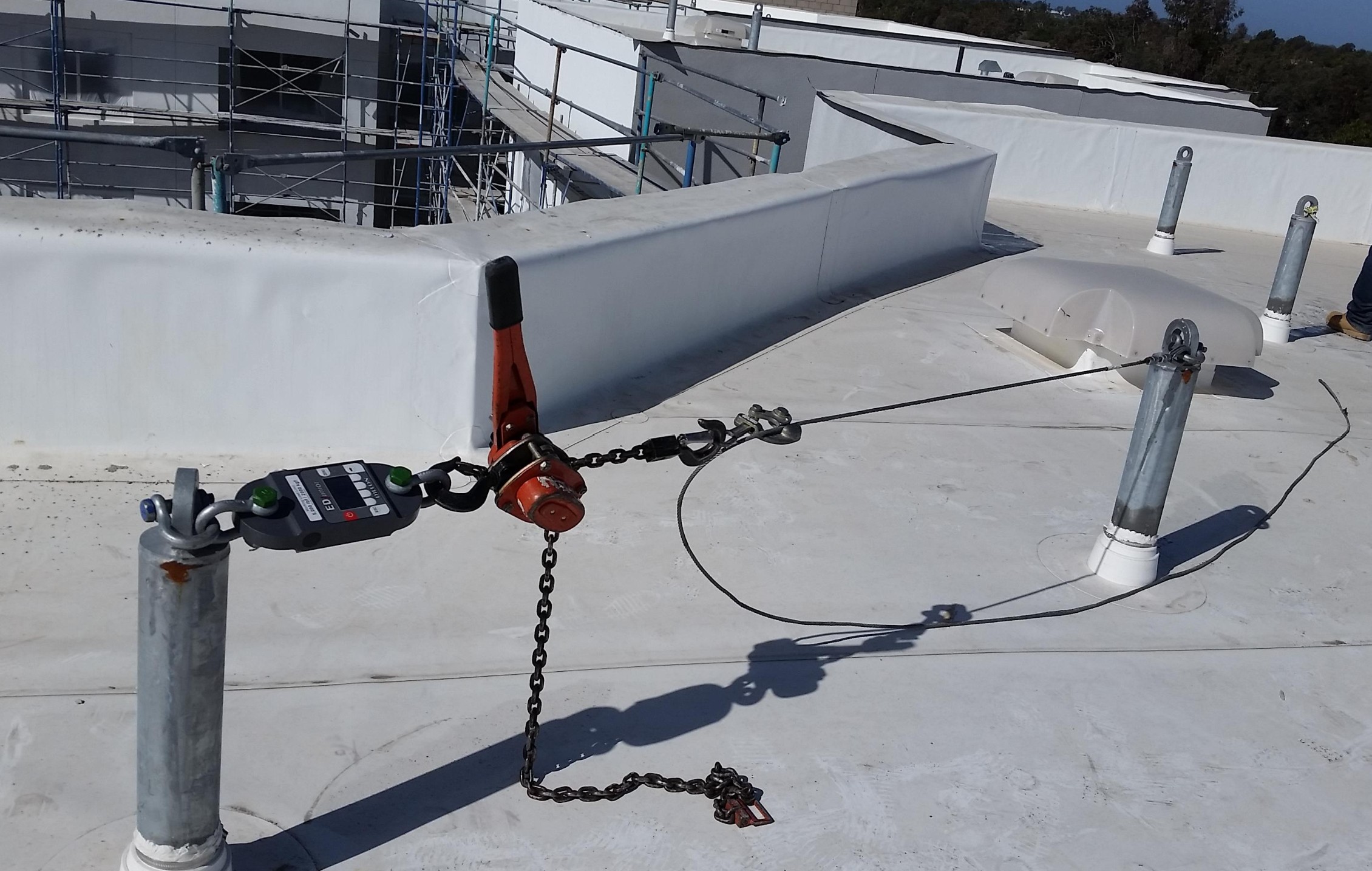
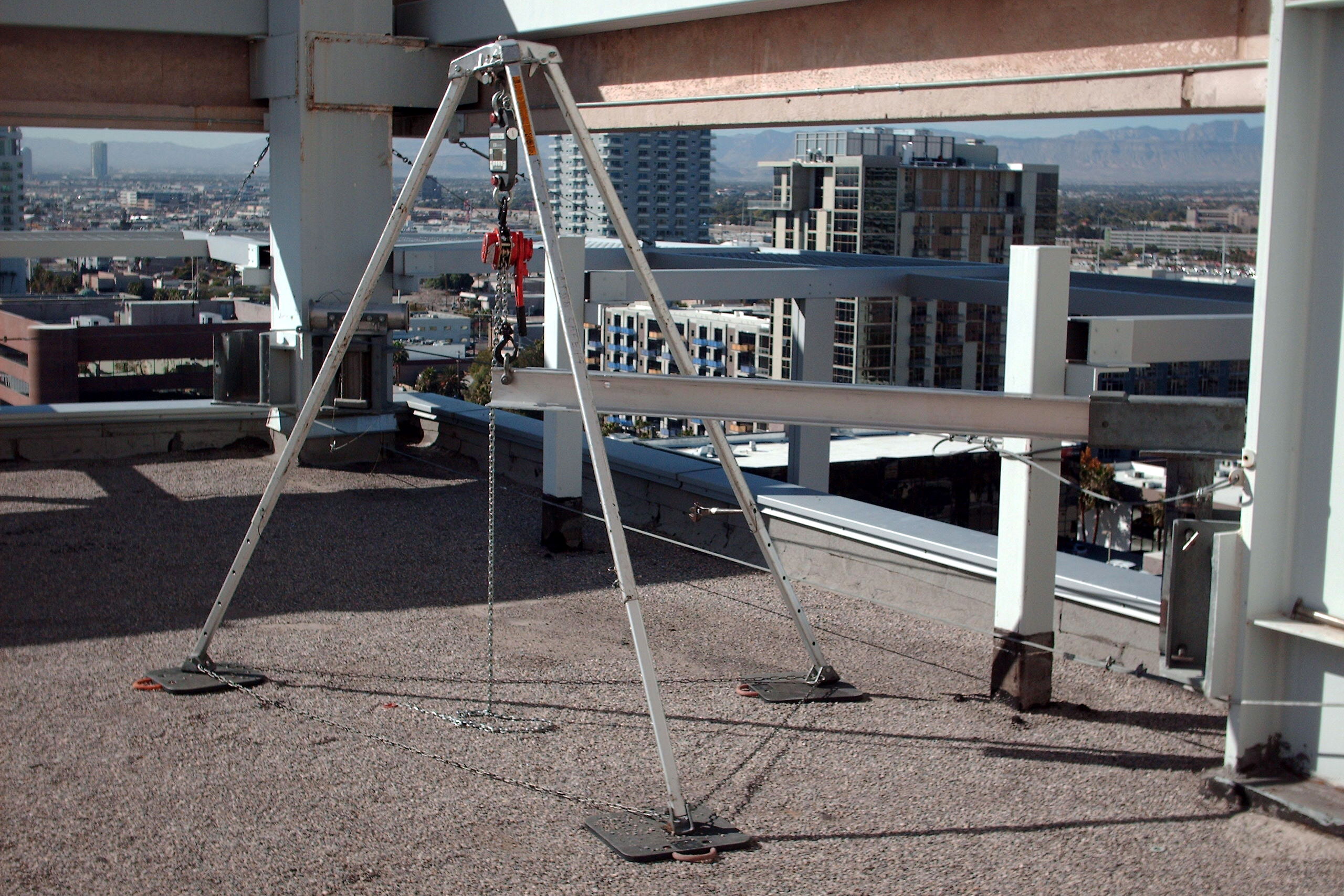
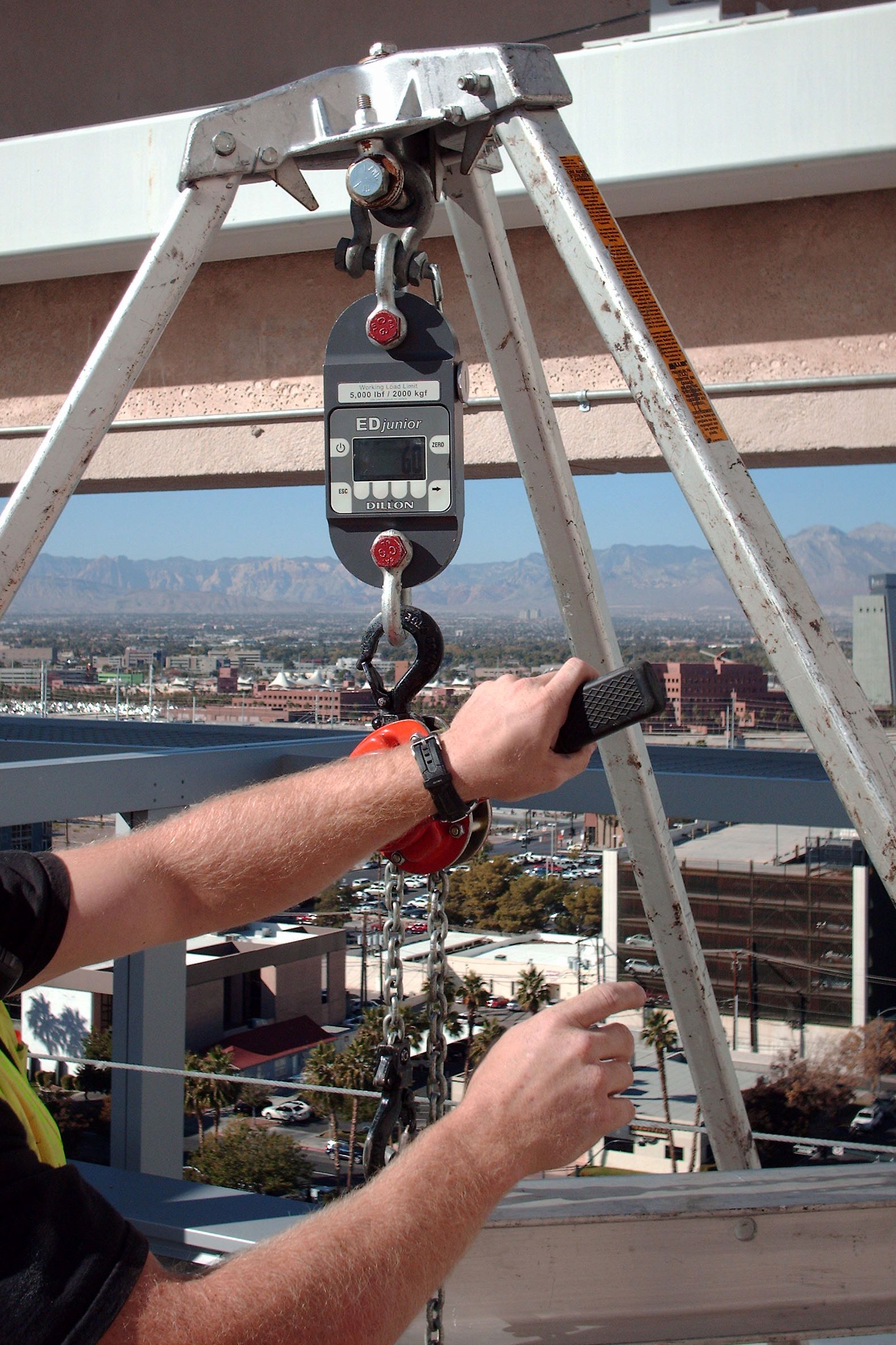
Testing involves applying a prescribed percentage of the system’s safe working load under controlled conditions, monitored with calibrated instrumentation.
The appropriate scope and frequency of testing depends on the condition, documentation, and design history of the system.
Common Testing Scenarios
1. Missing or Incomplete Documentation
When original design calculations or installation records are unavailable, certification cannot be issued without additional engineering review. In these cases, structural analysis and a comprehensive load testing program are required to establish system capacity.
2. Deficient Design
If equipment has been determined to be non-compliant or structurally inadequate, modifications or replacement may be necessary. Post-correction load testing verifies performance and supports re-certification.
3. Deteriorated or Damaged Equipment
When equipment condition is questionable, testing protocols are tailored based on observed deficiencies and risk factors.
Testing Frequency
For properly designed and documented systems, proof load testing is typically performed at intervals of five to ten years, depending on equipment type and condition.
All new installations require proof load testing prior to issuance of a certification of safe use.
Our Role
Highline develops detailed load test prescriptions that:
- Define testing methodology and loading criteria
- Establish safety protocols
- Include technical drawings illustrating test configurations
- Standardize scope to allow competitive bidding
- Ensure consistent documentation standards
We also provide professional oversight during testing to confirm procedures are executed safely and in accordance with the prescribed protocol.
All prescriptions are stamped by a Professional Engineer licensed in all 50 states.
Highline does not perform testing or repairs. Our role is strictly independent engineering evaluation and oversight, ensuring objective and defensible compliance documentation.
Systems Commonly Tested
- Roof tie-back anchors for Controlled Descent Apparatus (CDA) / Rope Descent Systems (RDS)
- Horizontal Lifeline (HLL) systems
- Outrigger beam systems
- Davit pedestals and portable davit arms
- Monorail track and trolley systems
- Gantries, rigging sleeves, parapet clamps, and miscellaneous rigging
- Intermittent Stabilization Anchors (ISA)
- Powered platforms and single-man baskets
- Building Maintenance Units (BMU) and roof car systems